
Why It Matters:
The Panchayat Raj System was introduced in India to address the challenges of rural development, promote participatory democracy, and empower local communities. It anticipates holistic change, community empowerment, social inclusion and equity, accountability and transparency, capacity building and empowerment, role in democratic governance, and promoting sustainable and inclusive rural development.
Rajiv Gandhi National Institute of Youth Development has conducted a study of Asrang Gram Panchayat, Kannaur District, Himachal Pradesh in 2017. This study reflects the status of every village in the country as a whole. As we can see from the Study report that the villages are under the grip of several issues – under-development, lack of infrastructure, lack of basic education, drinking water, hospitals, roads; underutilization of youth potential; lack of basic skills among the youth; demoralized youth; addiction among the youth; poor participation of youth and the people in the Gram Sabha; migration in search of menial jobs; superstitions; child marriages; losing touch with the culture and history; and so on and so forth.
Thus, though the Constitution envisages Gram Swaraj and the all-round development of the villages, it has not happened to the desired extent, because of various known reasons.
Education in our villages
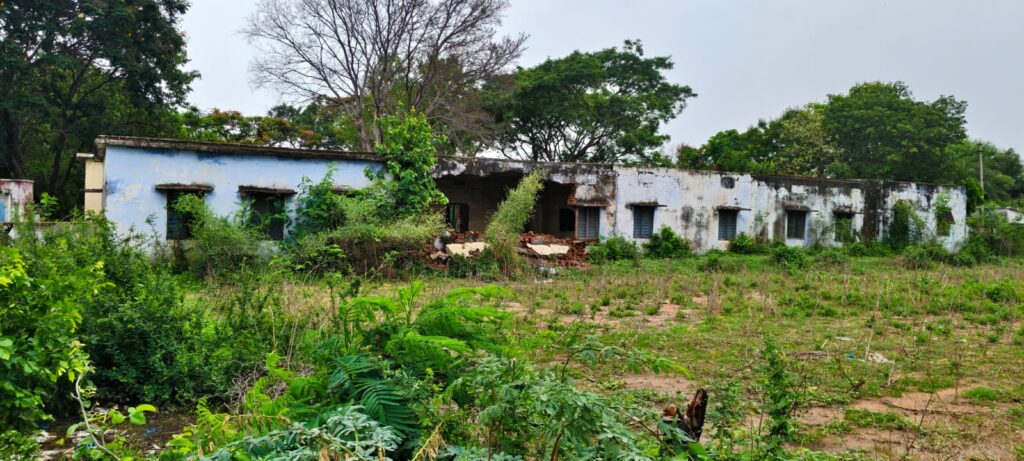
The educational institutions are in poor condition lacking basic facilities. For example, in Chowtupally village, Achampet Mandal, Nagar Kurnool district, the school building is in dilapadated condition and the children are fearful to enter into the school building and they are forced to study under the trees. This is the situation that we notice in most of the villages in the State of Telangana.
Health in our villages
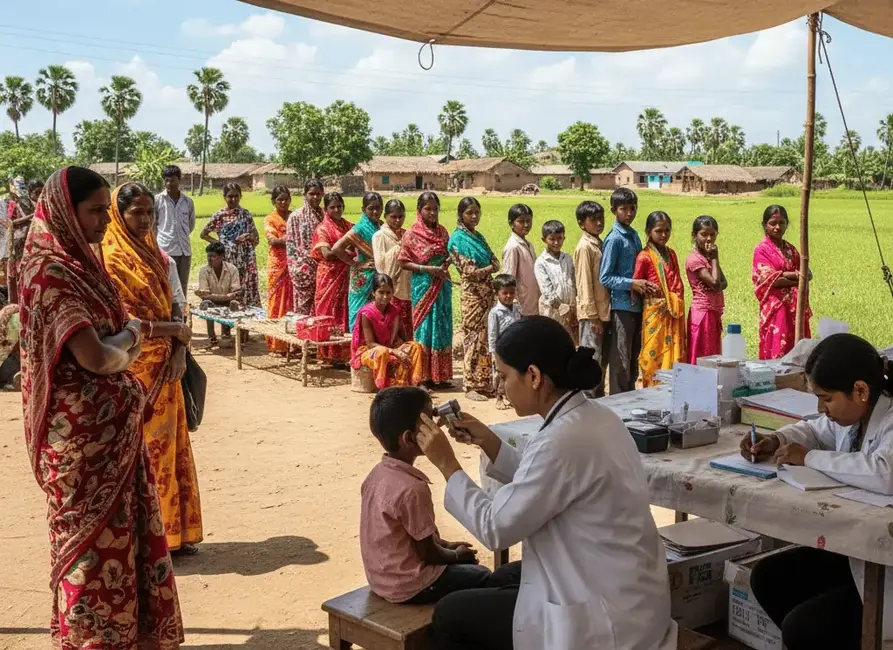
There are inadequate or no hospital facilities in our villages. In Mallampally village, Palakurthy Mandal of Jangaon District, the villagers need to travel for about 25 kms in times of emergencies and there are no government facilities. Even for minor health issues, they need to walk for 3kms by katcha road where chances of snake bite is more.
Migration from village to cities
The biggest problem the villagers facing is migration to cities in serach of livelihood. For so many reasons, the agriculture has become unremunerative and the farmers are debt-ridden.
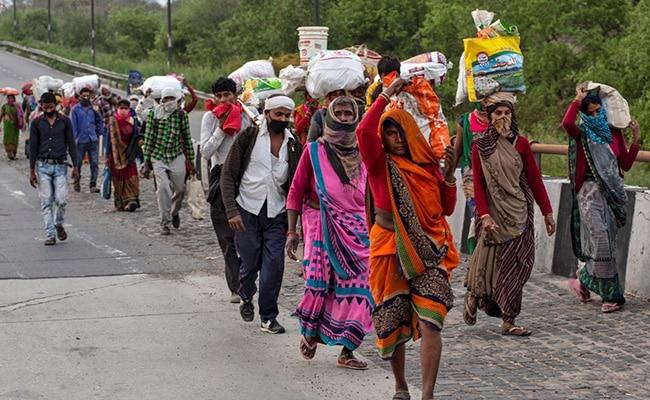
Migration and Slums
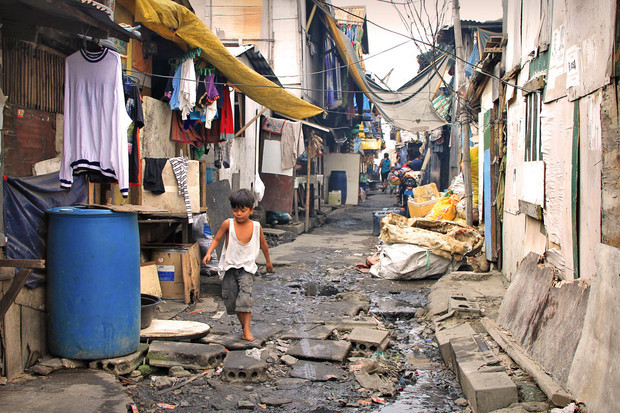
The migration from villages to cities is causing proliferation of slums and our people are forced to live in unhygenic conditions lacking basic living conditions.
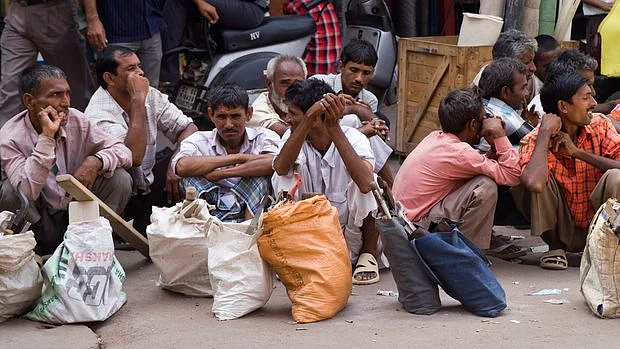
Farmers turning to Construction Labourers
The farmers with about 10 acres are turning into construction labourers.
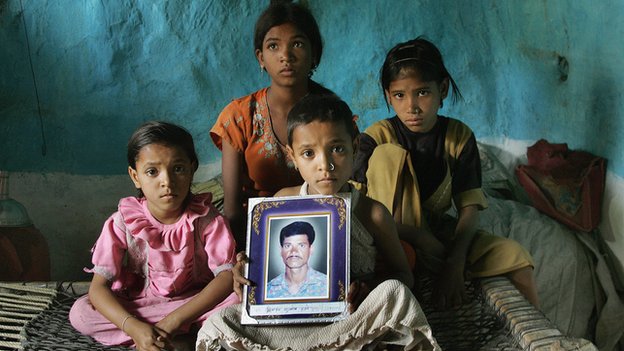
Farmers' Suicides
As per Government Statistics for the period from 2014-2022, there are 30 farmers' scuicides per day. This number has increased in recent years. This indicates their helplessness in the system. They are under the grip of so many forces and their living conditions are worsening year after year.
Poverty
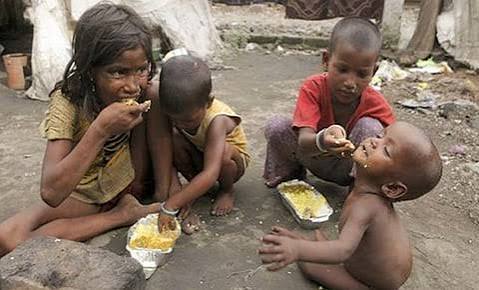
Poverty in our villages.
Why Challenge-119:
Hence, the Justice Movement of India took up this Challenge-119 as a small step towards a bigger VISION. Out of 12,777 gram panchayats in the State of Telangana, 119 gram panchayats are taken up to make them as the model gram panchayats during their 5-year term in accordance with the spirit of Panchayat Raj Act and the Constitution. These 119 Gram Panchayats will become the Model to the 119 Assembly Constituencies in the State. We believe that if a “true leader” is elected as the ‘Sarpanch’ of Gram Panchayat, holistic development of the village is possible. The challenge before us is to produce ‘true leaders’ in these 119 villages, who are 1) committed to the ‘Vision – The Preamble of our Constitution’, 2) who stand on ‘Values’ and ‘Principles’ (integrity and character) and 3) whatever they do, it will align with the ‘Vision’ and the ’Values and Principles’. There is a trend in the villages that the elections mean ‘distribution of money and liquor’ and ‘buying and selling’. We challenge this status quo and commit to redefine the ‘political culture’ that has been perpetuated in our villages, as against the spirit of our Constitution and the expectations of our ‘Founding Fathers’.
We are working on providing opportunities where people live i.e. in villages. We need to change the mindset of the people towards improving the living standards by way of working together, leveraging all the available resources in the village in alignment with the Sustainable Development Goals. We engage the poeple to sove their own problems like improving the schools, exploring employment opportunities by coming together and so on. Towards this objective, we act as a catalyst by providing interventions and linkages among various institutions - government and non-government organizations.
Status - In Progress
Total Gram Panchayats: 12777
Our Target: 119
Work in Progress: 5 villages
Do you want to JOIN this effort?
Contact:
Hyderabad: 9963603683
Jangaon: 8555929909
Go Deeper
The 73rd and 74th Constitutional Amendments mandated the establishment of elected local bodies at the village, intermediate (block or taluka), and district levels to govern rural areas. It enabled the LGIs with the power and authority to function as 'units of self-government', though with varying levels of initiative, drive, interest, intensity and diversity of operations in practice.
The Panchayat Raj System was introduced in India to address the challenges of rural development, promote participatory democracy, and empower local communities.
Significance of PRI:
The Gram Panchayats are mandated under the Constitution of India to plan and implement schemes for economic development and social justice in respect of 29 subjects mentioned in schedule XI of the Constitution. Infrastructure refers to the basic physical and organizational structures and facilities. Physical structures include Roads, Culverts, buildings and other infrastructure and the organizational structures include transportation systems, communication networks, and healthcare facilities. It is crucial to provide basic infrastructure in villages to promote overall development and progress of society.
Mainstreaming Youth in Local Governance ‘refers to the activities for empowering youth to play an active role in Grama Sabha and other participatory structures at the local level, equipping them to make active contributions in the functions of Local Government and other local institutions, giving them a space and responsible positions in different committees and other decision making forums, and equipping them with personal and social skills to function as change agents in the society’ (RGNIYD, 2013). In operational terms, ‘Mainstreaming’ indicates ‘Engage, Enable, Ensure and Empower’ the target population in the development programmes, projects and other activities.
Youth organizations, both political and non-political, could play a crucial role of recruiting able youth to the development politics of local government system. In addition to extending support to the Local Governments in its functioning, youth can also become the 'Change Agents' aimed at bringing ‘Good Governance at the Grassroots’ (Gireesan, 2013).
Localisation of Sustainable Development Goals:
The Sustainable Development Goals (SDGs) serve as a global blueprint for sustainability and are endorsed by the Government of India under the UN's 2030 agenda. Collaborating with NITI Aayog, Central Ministries, State Governments, UN agencies, and Panchayati Raj Institutions (PRIs), India aims to achieve the 17 Goals and 169 targets by 2030. Recognizing the crucial role of Panchayats in governance, efforts are made to focus on Localised Sustainable Development Goals.
Ministry of Panchayati Raj has initiated thematic approach to planning through aggregating 17 SDG goals into 9 broad themes for localization of SDGs at grass-root level and their attainment through the collaborative efforts of all stakeholders of these 9 themes. Thematic LSDGs taken by MoPR to the entire country in a continuous systematic manner, the capacity building and workshops, Panchayat Development Index and GPDP being aligned to the LSDG Themes , presenting the indicators in the GPDP as data for evidence based planning, aligning the National Panchayat Awards to the 9 Themes.
A Study Report: Rajiv Gandhi National Institute of Youth Development has conducted a study of Asrang Gram Panchayat, Kannaur District, Himachal Pradesh in 2017. The study revealed that:
Educational Dimensions: Concerns, Issues and problems –
Social Dimensions: Concerns, Issues and Problems –
Economic Dimensions: Concerns, Issues and Problems –
Political Dimensions: Concerns, Issues and Problems –
Cultural Dimensions: Concerns, Issues and Problems –
This study reflects the status of every village in the country as a whole. As we can see from the Study report that the villages are under the grip of several issues – under-development, lack of infrastructure, lack of basic education, drinking water, hospitals, roads; underutilization of youth potential; lack of basic skills among the youth; demoralized youth; addiction among the youth; poor participation of youth and the people in the Gram Sabha; migration; superstitions; child marriages; losing touch with the culture and history; and so on and so forth.
Thus, though the Constitution envisages the all-round development of the villages, it has not happened to the desired extent.
Hence, the Justice Movement of India took up this Challenge-119. Out of 12,777 gram panchayats in the State of Telangana, 119 gram panchayats are taken up to make them as the model gram panchayats during their 5 year term in accordance with the spirit of Panchayat Raj Act and the Constitution. We believe that if a true leader is elected as the ‘Sarpanch’ of the Gram Panchayat, holistic development of the village is possible. The challenge before us is to produce ‘true leaders’ in these 119 villages, who are 1) committed to the ‘Vision – The Preamble of our Constitution’, 2) who stand on ‘Values’ and ‘Principles’ (integrity and character) and 3) whatever they do, it will align with the ‘Vision’ and the ’Values and Principles’. There is a trend in the villages that the elections mean ‘distribution of money and liquor’ and ‘buying and selling’. We challenge this status quo and commit to redefine the ‘political culture’ that has been perpetuated in our villages, as against the spirit of our Constitution.